

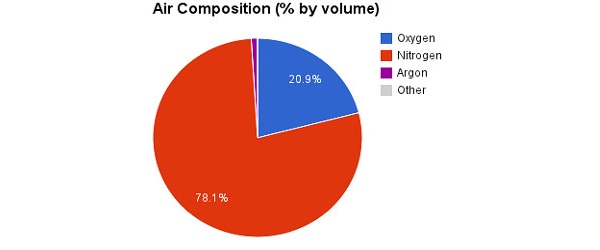
Ignorant nimrods at EPA decide to ban Argon. To paraphrase Shakespeare: the first thing we do, let’s kill all the bureaucrats. Never mind that Argon is a chemically inert noble gas, which makes it completely safe, how do you ban the third most common element in air?
View Comments (27)
The EPA is an enemy of the state, period.
I disagree. They are part of the state, they're an enemy of the people!
Have any of these dimwits ever heard of Argon Arc welding? Welding procedure of choice for critical applications including aerospace and the nuclear industry.
That guy who runs the EPA, The white haired old fudd with the girly glasses, can't we just ban him? He sure doesn't know a lot about science..
he's using the algore rhythm scientific method one.
Not quite. What actually happened was they banned a number of inactive ingredients in pesticides that are no longer used. Argon was one of them, but it's only been banned from pesticides. If someone wants to use it in a pesticide, they'll have to get it recertified, which is kind of stupid, but not related to anything else.
http://m.theweek.com/speedreads/index/270917/speedreads-no-the-epa-is-not-banning-argon
See my reply to PsychoDad.
But the problem is that people see something on this list and it gets added to the bad actor list of the day and all of sudden it is restricted in other uses. That is the reality of 'science based' modern regulation process that listens to dumbasses that are against dihydrogen oxide.
If you can't put it in pesticides, why should it be in the work place!!!!!!
Watch for the PSAs by actors condemning Argon, to hit the MTV crowd shortly.
The welding comment stood out to me. Could this be another attempt at getting rid of skilled labor?
No, there seems to be quite a bit of confusion in both the article and the comments (a LOT in the comments!).
This is NOT "banning" argon in any meaningful way. One function of the EPA is regulating pesticides. Anything going in a pesticide needs to be EPA approved, whether it is the active ingredient itself, which actually kills the pest, or an inert (inactive) ingredient, which is a carrier for the active ingredient (or can be something which helps the active disperse, or adhere, or mix with water, etc.). Important: part of the confusion over there is that "inert" used in this technical sense has NOTHING to do with the sense that argon is a chemically "inert". Same word, different meaning.*
So: at some point, argon (and a few other things) were used as inert ingredients in pesticides. Argon once appeared on the EPA's list of approved inert ingredients in pesticides. Apparently, no-one uses argon in this way any more, so the EPA is removing it from the list of approved inert ingredients. That is all. Nothing to do with industrial uses, nothing to do with declaring it a health hazard, nothing like that. Your only worry is if you wanted to start making a knock-off of Raid and use argon as a propellant.
*If you have a can of Raid, read the label: it will have one section marked "Active ingredients" followed by a list of chemicals and their EPA Registration numbers, and a line "Total Active Ingredients 3%" or some very small number. Under that will be a section reading (in this case): "Inert (or inactive) ingredients: 97%" They don't have to be listed by name, although they are the huge majority of what you bought.
Please don't fall into the bureaucrats' trap. That's how they get away with all this insane crap. The fact is, once they remove it from the approved list, nobody can use it again. You say nobody is using it anymore. I don't know, that may be, but that doesn't mean someone might not WANT to use it someday. If they remove it from the approved list, nobody can use it even if they want to. Capiche? Don't make excuses for these nimrods. There's no valid reason for doing this. Argon isn't going to hurt anyone, ever. If someone wants to use it, they shouldn't have to go through an EPA approval process to do so.
I think what you've done is fall for the EPA's cover-their-butt excuse making here. They planted that story in the media to make themselves look less stupid. Don't fall for it. I Googled Argon in pesticides and found a whole page describing how you can use Nitrogen and Argon to kill insects:
http://museumpests.net/solutions-fact-sheets/solutions-nitrogenargon-gas-treatment/
If I kept Googling, who knows what else I would find? Are you seriously saying nobody in America is including Argon in their pesticide treatments? How could you, or anyone else, know that?
Reading between the lines, it seems that what the EPA would really like to do is ban pesticides altogether. We could, of course, use genetic engineering to grow plants which resist pests, but as every good Progressive knows, genetic engineering would soon cause humans to mutate into pond scum.
As evidenced by the vegan leftists I have encountered.
Does this mean we will have to wear EPA approved breathing devices?
Giving the EPA any type of authority is like giving a set of car keys to a drunk teenager.
But sticking dozens of little, fragile glass containers with mercury in every house and workplace is just a-okay?
And these are the people who expect us to entrust them with our health care?
I have never purchased one of those mercury bulbs. They're just plain stupid and I refuse to participate in stupidity. For a while I managed to keep finding the old 100-watt incandescent bulbs and now I've started buying halogens. Halogens, by the way, are NOT chemically inert, but please don't tell the EPA.
CFL's are a scam. The higher cost is in now way offset by efficiency, longevity or safety. I am reminded of the funny way that certain products are immediately deemed unsafe/banned by the EPA just as soon as Dupont's patent runs out and a generic version can be produced.
Yeah, CFLs were patented by GE and, as everyone knows, GE is the biggest corporate leech in the world when it comes to government money.
You ought to feel the heat generated by the LED bulbs! Heat is a sure indicator of energy usage, so I don't see how CFLs or LEDs are any more efficient than incandescent bulbs. They all throw off just as much heat.
I use a combination of daylight balanced CFL and LED lights for shooting videos, and one of the things I like best about them is the lower wattage for the light output, and they run VERY cool.
I don't understand that. I have CFLs and the base of them is hotter than Hades, the LEDs are hot at the base too, but not as hot as the CFLs, UNLESS, you are using low voltage bulbs.
Like I said, the CFL bulbs run very cool for the amount of light produced, which is also supported by the fact that they use less wattage for the light produced. MUCH less. In my small studio, it used to get VERY hot when I was using halogen, and you can touch the CFL bulbs with your finger and they're cool. I never tried touching the base, but overall, there's less power being consumed in producing heat than with other types of lights.
The LED lights, I guess that if you're looking at the ones that have the voltage stepped down at the base of each light, that will create some heat, but not as much as a standard bulb that's producing the same amount of light would produce, or it would use the same amount of power. Which it doesn't. My LED lights are battery operated, since I use them on remote location so often, and the batteries put out the voltage that the lights operate on, so there's nothing lost to heat in the stepdown. They run SUPER cool.
Of course, none of this is to say that I'm on the side of the people that want to FORCE us to use particular kinds of lights.
OK, so the LV LEDs I can understand. Next time, check how hot the base on the CFLs get. Just saying.
Here's what we know for sure: we're paying ten times as much for bulbs. And I have to listen to that jackass Fred Upton's campaign commercials, one of the co-sponsors of that bill outlawing our lightbulbs. Bastard.
The CFL and I used the 'L' word lightly, is all about crony capitalism. The govt pressured manufacturers to shift to CFLs, even cheaper inda-dink bulbs came in from overseas and no one was buying CFLs except for institutions. Then people like GE complained to the govt and boink, legislate out the bulbs that give off light.